There's a window for a musical ear. It closes around age six.
Pitchlings is the mobile & tablet app (iOS & Android) that turns early childhood into a gentle, wordless musical game your child will ask to play — built on real absolute-pitch research. Be one of our first 200 families and get the full app free.
No ads · No tracking · No microphone · 100% on-device
Who is hiding in the musical cloud? Tap the cloud to listen, then tap the friend!
Five senses at once — so the note actually sticks.
Three minutes a day on iPhone, iPad, or Android. No reading required, no timers, no losing.
1. A Creature Sings
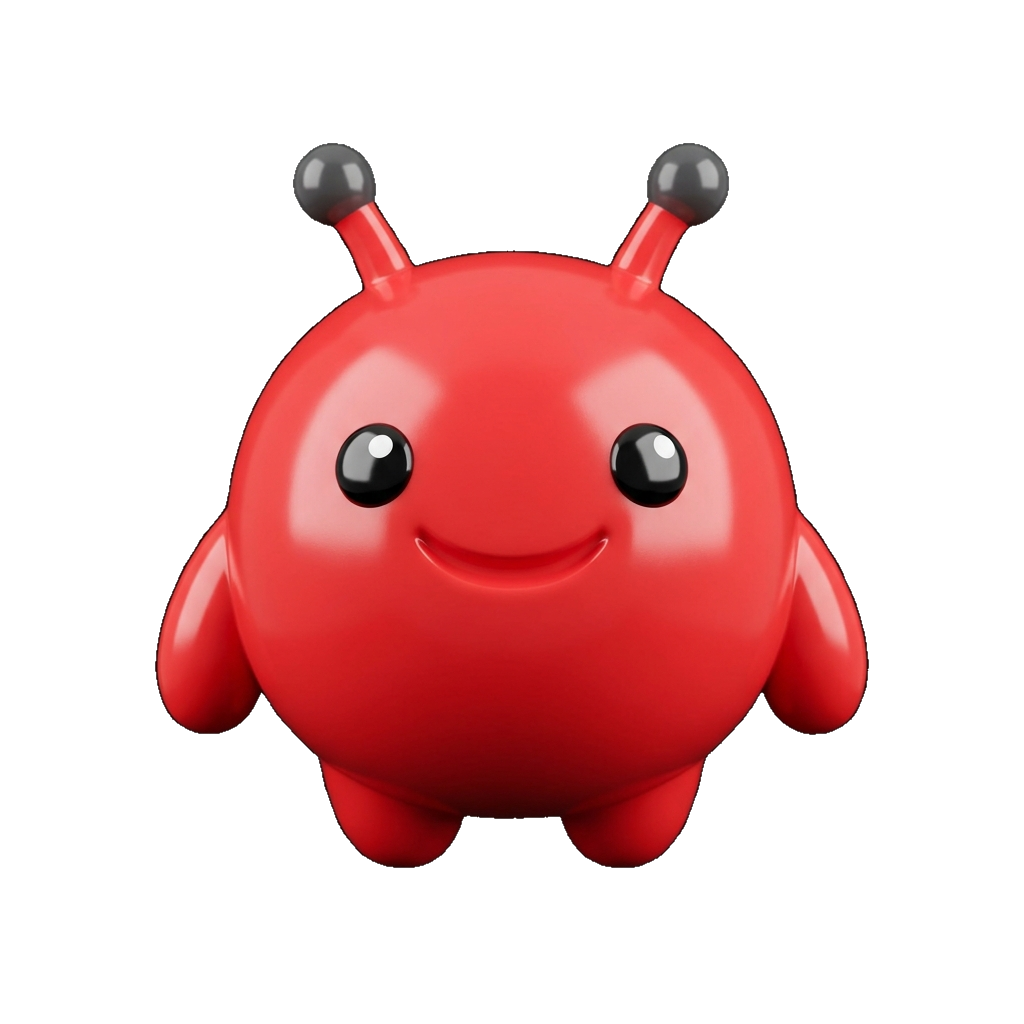
Each of the 12 Pitchlings has its own musical note (C / Do through B / Si), shape, and color.
2. Active Discovery (Try-Until-Correct)
Your child taps who sang. If they tap another friend, they hear that friend's note and immediately compare — building real auditory discrimination instead of guessing.
3. Real Instruments & Harmonic Duets
Each note naturally progresses to real recorded instruments — Grand Piano, Violin, Flute — and 2-note Harmonic Duets as your child's ear grows.
Most of us missed the window. Your child is in it right now.
In the early years before age six, a child's auditory cortex wires for pitch categories in a way it never quite will again. Every mechanic in Pitchlings is built directly on published cognitive-psychology and music-perception research.
The Sakakibara Longitudinal Protocol
In Ayako Sakakibara's landmark longitudinal study of 24 children aged 2–6 trained with daily pitch and chord identification, nearly every child who completed the protocol acquired genuine absolute pitch. Pitchlings turns this exact daily identification method into wordless play.
📄 Sakakibara (2014), Psychology of Music · doi:10.1177/0305735612463948 ↗Why Single-Timbre & Muddy Apps Fail
Research shows that learners trained on only one synthetic sound lock onto surface harmonics rather than true pitch class (chroma). Worse, playing multiple instruments simultaneously muddies the overtone spectrum. Pitchlings plays one pure recorded instrument at a time — rotating across Grand Piano, Electric Piano, Violin, and Flute across octaves.
📄 Bongiovanni, Heald, Nusbaum & Van Hedger (2023), Atten. Percept. Psychophys. · doi:10.3758/s13414-023-02653-0 ↗True Long-Term Memory vs. Short-Term Echo
Without clearing short-term auditory ("echoic") memory between trials, games only test whether a child can match a note to the one heard two seconds ago. Pitchlings uses a brief non-tonal Magical Breeze between rounds and active try-until-correct comparison so every tap retrieves pitch from genuine long-term memory.
📄 Van Hedger, Heald & Nusbaum (2019), PLOS ONE · doi:10.1371/journal.pone.0223047 ↗3 Minutes a Day Beats Cramming
Perceptual categories consolidate during sleep across multiple days — never in a single marathon session. Pitchlings enforces gentle 3-minute daily micro-sessions and requires multi-day retention across all pure instruments before a note earns its permanent Star.
📄 Creel (2016), Cognitive Science · doi:10.1111/cogs.12237 ↗Does it work? Here is our straight answer.
We built Pitchlings on the multi-day overlearning, pure-instrument timbral transfer, and echoic-memory clearing methods researchers study. We can't promise your child will end up with perfect pitch — no honest app can. What we promise is the right auditory practice, made joyful and pressure-free, during the years it counts most.
Free for our first 200 families.
In return, we ask one simple thing: play a few minutes a day with your child on iOS (TestFlight / App Store) or Android (Google Play) and tell us how it's going. You'll keep the full 12-Pitchlings unlock free forever.
Everything you need to know
Is this just more screen time?
Pitchlings is designed for 3-minute daily micro-sessions with zero addictive loops, zero fast-cut animations, and a built-in Parent Zone screen-time cap.
Is my child too old if they are 7 or 8?
Before six is the peak window for effortless pitch categorization, but older children (and adults!) still build a remarkably sharp musical ear and relative harmony recognition.
What does it cost after the 200 founding spots fill up?
A single, parent-gated one-time unlock for the whole family (all child profiles included). Never a subscription.